Emsland-Aller Aqua: Two wastewater systems in one plant
A three-stage MBBR system enables the reliable treatment of two types of wastewater with different seasonal characteristics.
The Challenge: Consistent Requirements, Varying Wastewater
Emsland-Aller Aqua processes potatoes and peas as raw materials for its products. This presents a unique challenge for industrial wastewater treatment: From August through November, operations are dictated by the potato harvest season, and from December through July, by the pea harvest season. As the raw materials change, so do the properties of the resulting process wastewater. Organic load, nitrogen content, and the C/N ratio vary significantly throughout the year.
The requirements for effluent quality, however, remain constant. For direct discharge, regulations regarding chemical oxygen demand (COD), total nitrogen, and total phosphorus—among other parameters—must be met. The specific limit values are set forth in the discharge permit issued under water law. Especially when inflow conditions fluctuate, a treatment concept is therefore needed that is not tailored to a single operating condition.
From Wastewater Profile to the Right Treatment Concept
For DAS Environmental Experts, therefore, the planning process did not begin with the selection of a single technology, but rather with the question: How must the overall system be designed so that it operates reliably with both types of wastewater?
To this end, various biological processes were initially considered. Key factors included a high biomass concentration, stable process control, a compact design, and the ability to expand the system as needed. In collaboration with the customer Emsland-Aller Aqua, the decision was made to use a multi-stage MBBR (Moving Bed Biofilm Reactor) process.
Before final sizing, DAS Environmental Experts analyzed the wastewater in the laboratory. Among other things, COD degradation rates as well as nitrification and denitrification processes were assessed, and changes in the C/N ratio were evaluated. A subsequent pilot study verified the results under realistic conditions. This allowed for the validation of reactor sizes, aeration concepts, and the configuration of the biological stages.
Three biological stages for different tasks
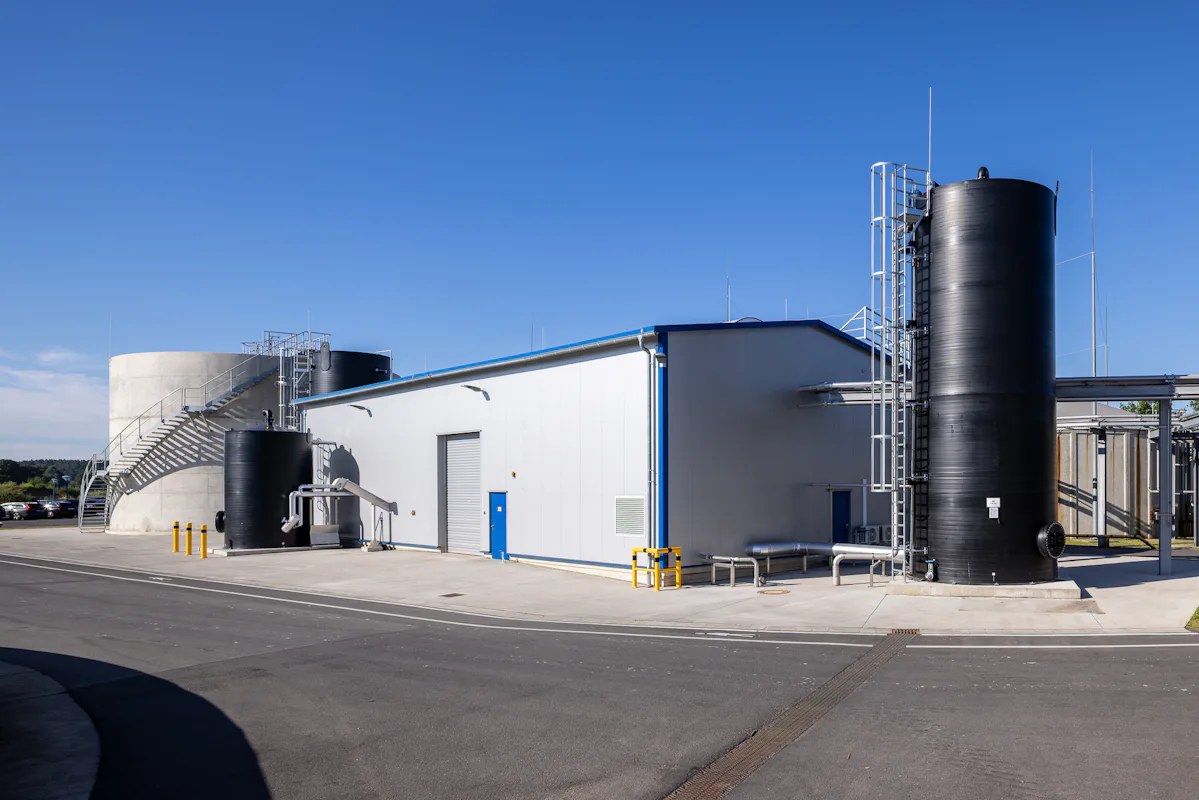
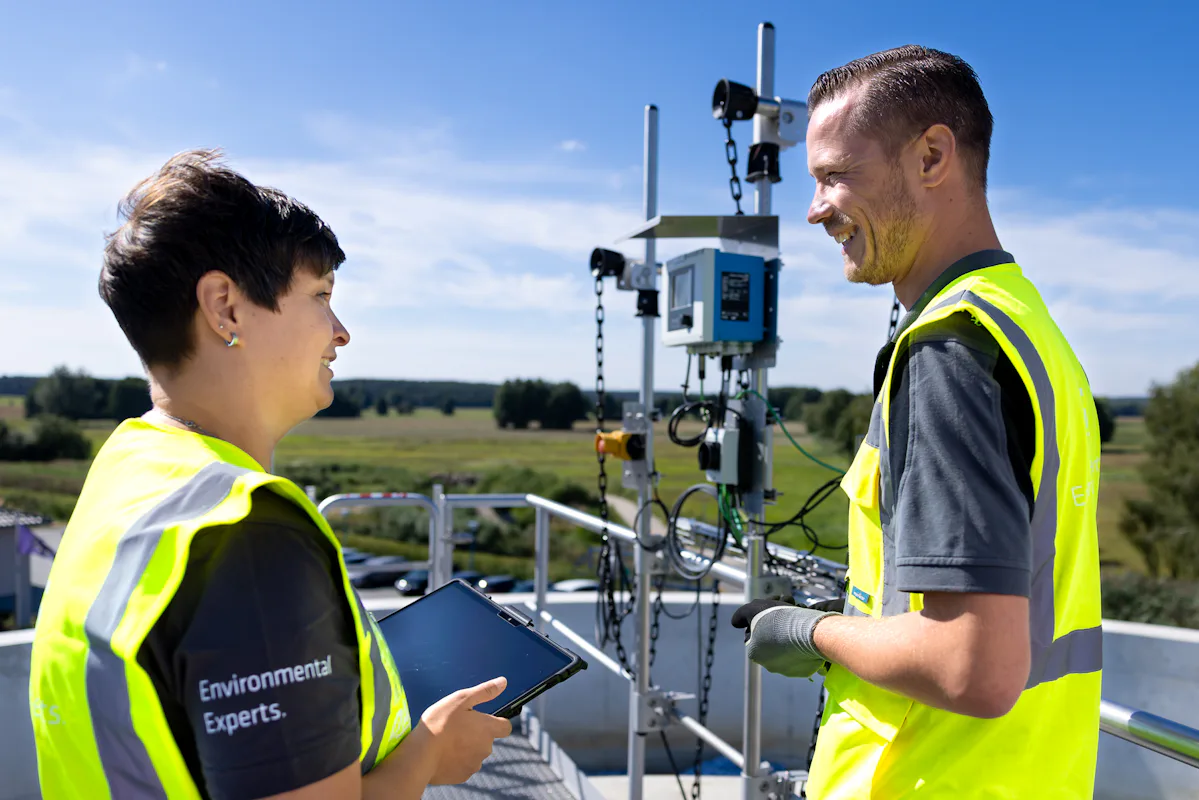
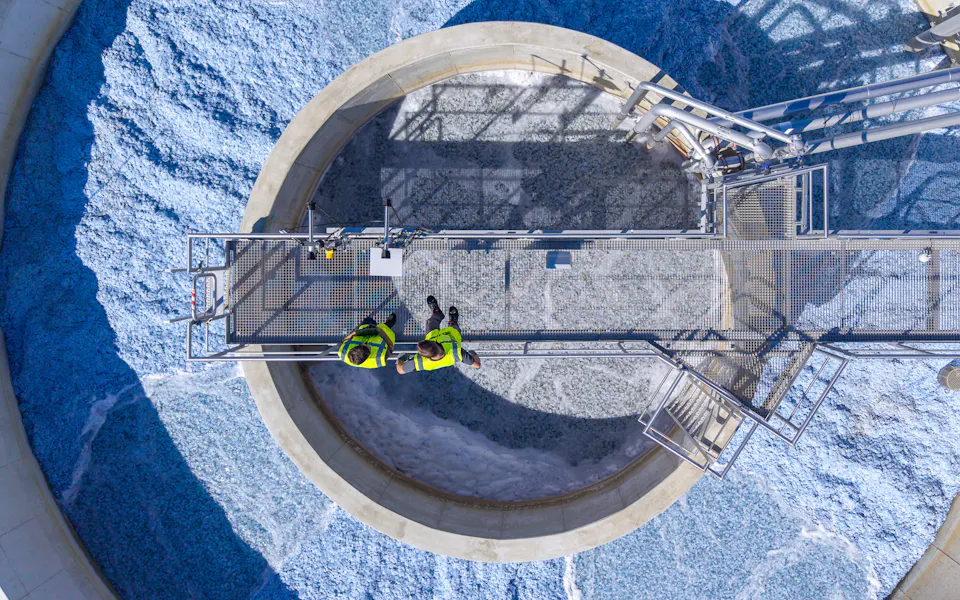
At the heart of the plant is a three-stage MBBR system. In the first step, the various wastewater streams are combined and homogenized in a mixing and equalization tank. This helps balance out fluctuations in volume and composition before the wastewater reaches the biological treatment stage. Online analyzers continuously measure key parameters such as COD, nitrogen, and phosphorus, providing the basis for demand-based nutrient dosing.
Each MBBR stage performs a specific function. The high-load stage reduces the majority of the organic load. In the low-load stage, the remaining organic load is further reduced, and ammonium is oxidized to nitrate through nitrification. The separate denitrification stage finally converts this nitrate into nitrogen gas (N₂), thereby specifically reducing the total nitrogen in the effluent.
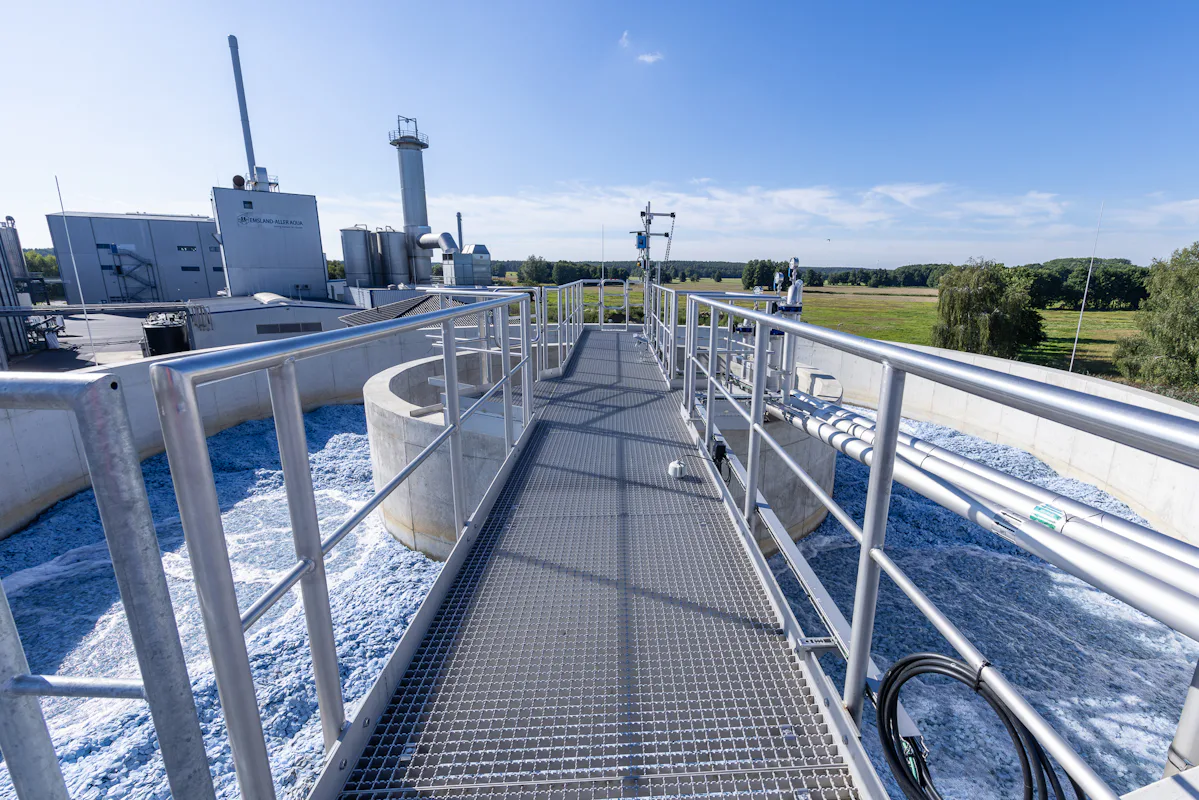
The MBBR process is based on the biofilm principle: Microorganisms colonize freely moving carrier materials within the reactor. As a result, the biomass remains in the system longer and can better adapt to challenging wastewater conditions. Sludge recirculation is not required. This simplifies the plant hydraulics and reduces process complexity.
Chemical-physical treatment complements biological treatment
To ensure compliance with effluent quality requirements, chemical-physical process steps supplement the biological treatment. For phosphorus removal, dissolved phosphates are converted into sparingly soluble compounds through a targeted chemical precipitation process and subsequently removed from the wastewater as solids. After biological treatment, the resulting excess sludge is separated by flotation. Finely dispersed air bubbles attach themselves to the solid particles and carry them to the water’s surface. The separated sludge is then mechanically dewatered. This reduces its water content and thus the volume required for storage and removal.
The result is a coordinated overall system that compensates for fluctuating influent conditions, biologically degrades carbon and nitrogen compounds, and combines phosphorus removal with sludge separation and dewatering.
Bottom line: Designed for two types of wastewater
From the outset, the plant was designed to handle two wastewater streams with different seasonal characteristics. The respective load profiles were therefore incorporated into the planning and design of the individual process stages. Laboratory tests and pilot studies provided the data foundation for this and helped to validate reactor sizes, aeration, and stage configuration.
The functional separation of high-load treatment, nitrification, and denitrification enables targeted process control under varying C/N ratios. At the same time, the biomass colonizing the support media increases the system’s robustness against load fluctuations and challenging wastewater conditions. Combined with chemical phosphorus removal and flotation for sludge separation, this results in a plant design tailored to seasonally varying production conditions.
This fulfills the project’s central requirement: to reliably treat two distinct seasonal wastewater characteristics in a single plant while ensuring consistent effluent quality.
Further impressions