Plasma – Alternative Energy Source
Plasma technology offers the semiconductor industry a flexible and future-proof solution for exhaust gas treatment. With its ability to efficiently decompose pollutants with high global warming potential, it makes a significant contribution to the sustainable development of this key industry and to the decarbonisation of the subfab area.

How does the Plasma-Wet process work?
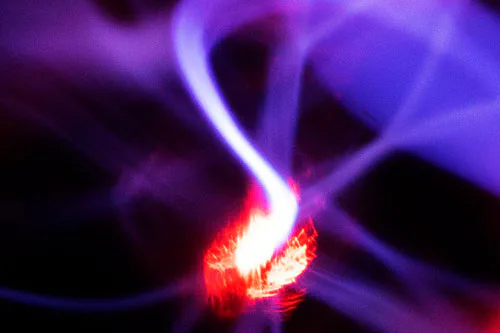
The decomposition of pollutants by plasma takes place through both physical and chemical processes which, when properly combined, result in the purification of the exhaust stream. At the heart of the process is the creation of a high-energy plasma state between two electrodes, visible as an electric arc. This arc, with a temperature of around 10,000 Kelvin, produces free electrons and ions. It is generated in a flowing nitrogen carrier gas, which transports some of the ions and electrons from the arc into a reactor. Most importantly, the high temperature of the arc is transferred to the carrier gas. The result is a kind of plasma flame that can also be seen with the naked eye. The high temperature and energetic components of the plasma flame meet the gas molecules from the semiconductor processes in the reactor. The strong molecular bonds are broken by the high energy of the plasma flame. The temperatures reached in the plasma contribute significantly to thermal decomposition, which is particularly advantageous when treating very stable PFCs used in etching processes, for example.
The broken structures lead to reactive radicals. These should not recombine into their harmful initial form but react to harmless molecular compounds.
The constituents of PFCs require additional oxygen and hydrogen, which are present in the reaction space in the form of water. This allows, for example, for a controlled reaction of carbon to CO2 and the reaction of fluorine to hydrofluoric acid. The latter is washed out of the exhaust gas stream by the scrubber and can be neutralized in the system.
Technical Implementation Example: STYRAX Plasma-Wet System
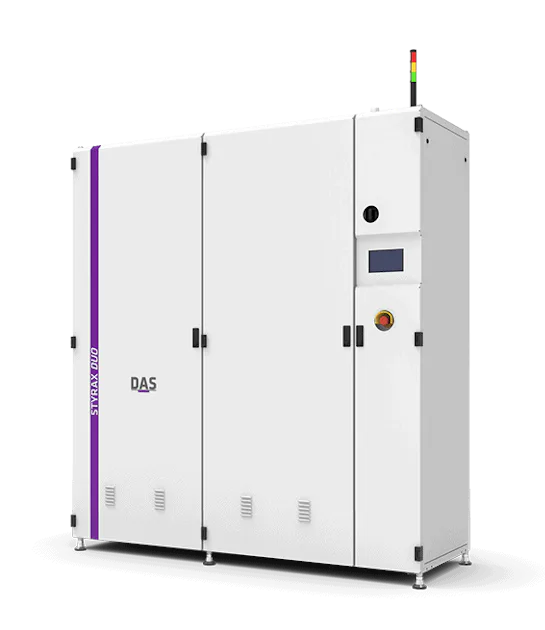
Our innovative STYRAX plasma-wet system uses a DC plasma with nitrogen as the carrier gas and a plasma torch delivering 7–15 kW of adjustable power output, which can be tuned according to requirements. The direct transfer of energy from the plasma to the exhaust gas ensures highly efficient decomposition of pollutants, especially when treating PFC gases. The flexibility of the STYRAX allows it to be adapted to different process gases, making it ideal for use in a wide range of semiconductor processes. Depending on the application, the system is customized and can be used for etching processes (e.g. PFC gases) or CVD processes (e.g. H2, SiH4).
A key feature of the STYRAX systems is its high reliability, with over 98% uptime, due to its robust design and low maintenance requirements. The plasma torch power supply has an excellent AC/DC conversion efficiency of over 95%. As a result, the amount of energy required for exhaust gas purification can be significantly reduced, saving thousands of dollars per year in exhaust gas treatment costs.
Sustainable Waste Gas Treatment using State-of-the-Art Plasma Technology
The use of plasma in waste gas treatment systems enables the destruction of over 99 percent of pollutants while offering higher energy efficiency and a reduced environmental footprint compared to burner scrubber systems.
Additional Advantages
Another advantage of the STYRAX system is the conservation of resources: in combination with closed washing circuits, water consumption can be significantly reduced. Optionally, water consumption can be further reduced by dosing caustic soda or potassium hydroxide solution, which further improves the sustainability of semiconductor production.
A link between the cleanroom process tool and the plasma abatement enables intelligent system control and dynamic adaptation of energy consumption. In addition, the system can use systemic software solutions to respond specifically to incoming gases and further adapt energy use to requirements. This leads to a further increase in overall efficiency and underlines the forward-looking orientation of this exhaust gas abatement system with regard to environmental protection and economic efficiency in semiconductor production.
STYRAX is an established and reliable system sold worldwide. The particular challenge in developing the system was to add the plasma components without increasing the footprint of the system, creating additional service areas or compromising performance. Thanks to our own efforts in developing an AC/DC power supply, we were able to make the most of the existing space. In addition, adjustments were made only where necessary. Although the electrical system and reactor head have been modified, the rest of the system continues to use proven STYRAX technology. This allowed the installation and service areas to be maintained while improving performance.
Consulting
Find out now about the use of Plasma as an alternative energy source for your subfab.
Director Key Account Management Global